

Doypack Cat and Dog Food

Pet food products are among the product groups that demand superior performance from packaging in terms of both ingredient quality and shelf life. Dry food, treats, powdered supplements, and wet food, offered in different formulations, require special protection against external factors such as moisture, oxygen, and light. Therefore, when choosing the right doypack packaging for pet food, not only visual design but also barrier properties and ease of use should be considered.
Choosing the wrong packaging can lead to problems such as the food losing its freshness, its flavors fading, or oily ingredients seeping through to the packaging surface. On the other hand, choosing the right packaging can protect the product's shelf life and improve the user experience.
Packaging Structure According to Baby Food Type
Pet foods have different physical characteristics, which directly affects the type of packaging used. Here are the details of packaging requirements for different types of pet food:
Dry Food:
Dry pet foods generally have a high fat content and are quite sensitive to oxygen. Contact with oxygen can cause the product to spoil and reduce its nutritional value. Therefore, dry pet food packaging should be made of materials with strong barrier properties. Doypack packaging, reinforced with metallized or aluminum layers, minimizes oxygen and moisture penetration, preserving product quality for a longer period.
Treats:
Treats offered in smaller packages are generally products that are frequently opened and closed. The ideal packaging type for these products is a zip-lock doypack design. Thanks to this structure, the packaging maintains its shape and safety after each use, thus preventing a decrease in product quality.
Powder Supplements:
For powdered pet supplements, the airtightness of the packaging is of vital importance. For these products containing fine particles, the quality of the source and the robustness of the sealing mechanism are critical factors. Furthermore, it is crucial that the inner surface material of the packaging does not chemically react with the product.
Why are barrier properties critical?
Pet foods generally contain high levels of protein and fat, and when these components come into contact with oxygen, an oxidation process begins. Oxidation negatively affects both the nutritional value and odor profile of the product; therefore, materials with strong barrier properties should be preferred.
When choosing a suitable doypack, the following features must be taken into consideration:
· Oxygen transport resistance (OTR)
· Moisture barrier capacity
· Light transmittance
· Oil-resistant interior surface
Aluminum-reinforced doypack packaging provides superior protection, while lighter metallized films can also be a satisfactory alternative.
Zip lock or heat seal?
When choosing pet food, packaging characteristics directly affect the product's usability and freshness. The packaging for such foods is usually designed to be opened and closed multiple times. In this regard, zip-lock doypack packaging is a popular alternative. The zip system helps preserve freshness by minimizing air contact after each opening and closing.
On the other hand, for large volumes of dry food, a combination of zip lock and heat sealing systems can be used. This combination provides maximum protection until the first opening, reducing the risk of spoilage. After opening, it can be easily resealed, making the consumption process easier. 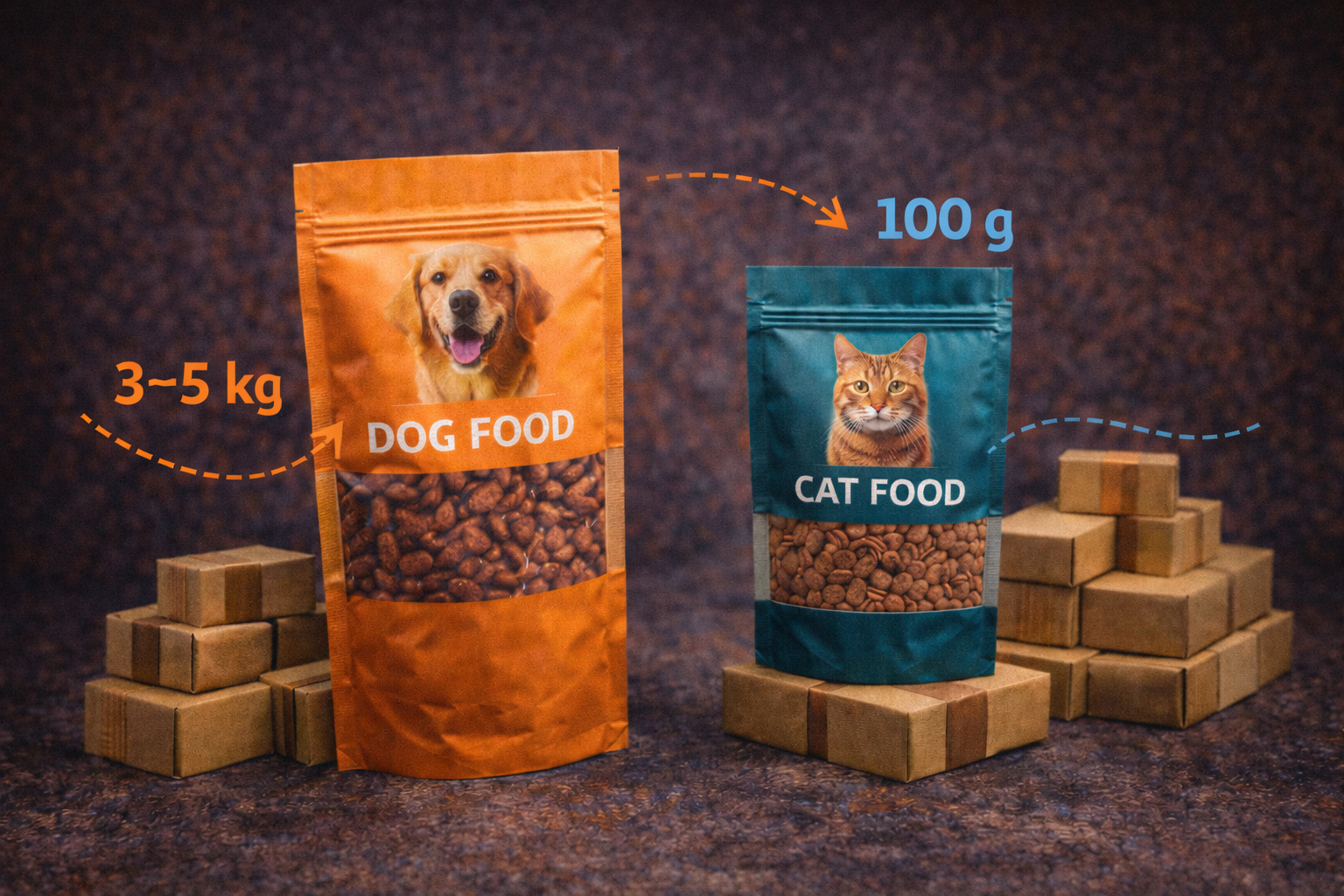
Relationship between Packaging Dimensions and Weight
Pet food packaging sizes vary depending on the product weight and intended use. For example, 100-gram treats and 3-5 kilogram dry food packages cannot have the same packaging structure. A sturdy base and the ability to stand upright are particularly critical for larger packaging sizes.
When determining the dimensions of a doypack package , the filling method, product density, and storage conditions should be considered. Using an unnecessarily large package can create excessive empty space inside and lead to increased oxygen levels. This can negatively affect the product's shelf life.
Using Printed Doypacks
In the pet products category, brand perception is one of the most important factors influencing customer choice. Especially in the premium pet food segment, differentiation on the shelf enhances brand value. Printed doypack packaging highlights brand identity while clearly presenting product features.
When designing packaging, certain details need to be considered:
· The design should not be compromised when the packaging is full.
· The zip closure should not disrupt the integrity or aesthetics of the print.
· The text should be easy to read and have appropriate contrast.
It should be remembered that functionality always comes before design. The primary function of packaging is to protect the product. A stylish appearance should not overshadow this fundamental function.
Storage and Transportation Conditions
Logistics processes for pet food Considering the long distances they travel, the durability of the packaging is of vital importance. Heavy products, in particular, are prone to deformation at the bottom corners during transport. To eliminate this risk, the thickness and layer structure of doypack packaging must be carefully planned.
How to Choose the Right Packaging for Pet Food?
When choosing doypack packaging for pet food, focusing on a single technical feature is insufficient. The product's form, fat content, intended shelf life, and usage habits must all be considered together. While an oxygen barrier is a priority for dry foods, resealability may be more decisive for treats.
The following questions should be clarified when choosing packaging :
· How long will the product last?
· Under what conditions should it be stored after opening?
· What is the expected shelf life?
· Is the target positioning premium, or the economic segment?
The answers to these questions determine the choice of kraft , metallized, or aluminum doypack packaging, as well as the necessity of a zip lock system. The right packaging decision not only protects the product but also strengthens brand credibility and user experience.