

The Most Common Mistakes When Choosing Doypack Packaging Size

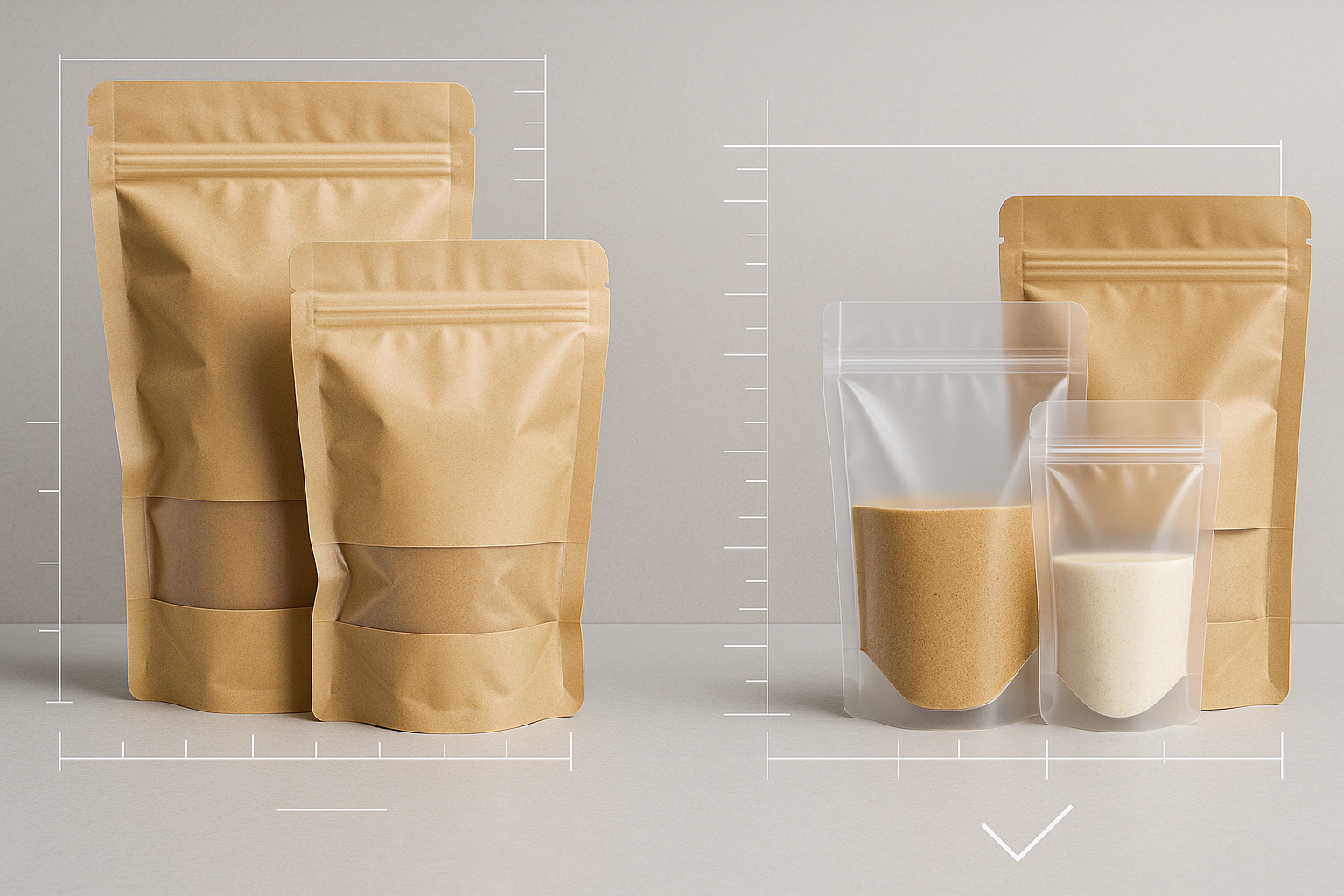
Doypack packaging size is much more than just a design detail; it directly affects many aspects, from how the product looks on the shelves to the filling process and logistics operations. If the correct size is not chosen, operational disruptions and negative consumer perception become inevitable. So, how do you manage this critical step flawlessly? Here are the key points to consider:
1. Don't confuse product weight and packaging dimensions.
Many brands believe that the packaging size should match the product's weight in grams. However, the density, fluidity, or physical properties of your product affect the space it occupies in the packaging. For example, not every 250-gram package is the right choice for a 250-gram product. This kind of misconception can lead to the product not being fully filled, empty spaces inside, and the packaging looking unappealing on the shelf.
2. Choose the appropriate size for the product's structure.
Different product types, such as powder, granules, liquids, or particles, require different packaging sizes based on specific criteria. Using the same doypack size for every product can lead to unexpected results. For example:
- Choosing a narrow-bottomed container for liquids can lead to leaks.
- Using excessively long packaging for granular products complicates the filling process.
- In products with multiple parts, insufficient opening width becomes a serious problem for the user.
When the correct measurements are not chosen, everything you produce requires more effort and negatively impacts the consumer experience.
3. Don't Neglect Shelf Performance
It's not enough for your packaging to just look good; it's also important that it stays upright on the shelf and maintains its shape. Incorrectly designed dimensions can cause the packaging to tip over or fail to present an aesthetically pleasing appearance. Bags with tall, narrow bases, or those with insufficient base width for heavy products, reduce shelf stability and negatively impact your product's appeal.
4. Don't forget compatibility with the filling machine.
When choosing the packaging size, the specifications of your filling machines in the production line should be taken into consideration. If the wrong size is chosen, this can lead to:
- It can reduce the filling speed,
- It can cause shutdown errors,
- And it can increase the rate of waste resulting from production.
5. Act Smartly in Logistics and Warehousing
Logistics processes are greatly affected by the size of the doypack packaging. If packages that are too large are chosen, space efficiency decreases during storage and transportation. Conversely, a package that is too small can increase the risk of deformation. These errors;
- It inflates shipping costs,
- It renders the storage space unusable.
- And it increases the likelihood of packaging damage.
6. Prioritize Consumer Perception and User Experience
Packaging size plays a significant role in how consumers perceive a product. Disproportionate designs can lead to misleading impressions of the product.
- Large packages containing only a small amount of product can create a feeling of being "deceived" for consumers.
- Bags that are too full can lead to problems such as spills and lack of control when opened.
Such situations can have undesirable negative effects on your brand value.