Raw material bags are one of the basic packaging materials used in production facilities. They are generally preferred for transporting, storing, and protecting raw materials in powder, granular, or flake form. Indispensable in industrial production, these bags both facilitate logistics and contribute to the preservation of product quality. They are widely used in many sectors, primarily food, chemical, plastics, and construction.
What is a Raw Material Bag?
Raw material bags are specialized packaging products used in production processes, typically plastic-based, capable of transporting raw materials in granular, powder, or solid form. These bags are designed to protect the material from external factors and facilitate its transport. They can be manufactured in various thicknesses, volumes, and material types. Manufacturers can specify the bag type, durability, and leak-proof properties according to their needs. Models suitable for both manual and automatic filling systems are available. Types of Raw Material Bags
Raw material bags are produced in different types depending on the application area, the type of material to be transported, and environmental conditions. The most common types include kraft bags, polyethylene bags, polypropylene bags, metallized bags, and vacuum bags. Each offers different advantages. For example, polyethylene bags are water-resistant, while kraft bags are preferred for their environmentally friendly nature. Additionally, UV-resistant bags are designed for outdoor use. Antistatic bags are preferred for raw materials containing chemicals.
Metallized Raw Material Bag
Metallized raw material bags are specialized bags developed to provide extra protection, particularly against moisture and light. Coated with an aluminum layer, these bags minimize the impact of external factors on the contents. They are widely used in the food industry, for packaging pharmaceutical raw materials, and for chemical components requiring high sensitivity. The metallized surface also extends the shelf life of the contents and creates a protective barrier against oxidation. Their leak-proof design ensures safety during both transport and storage.
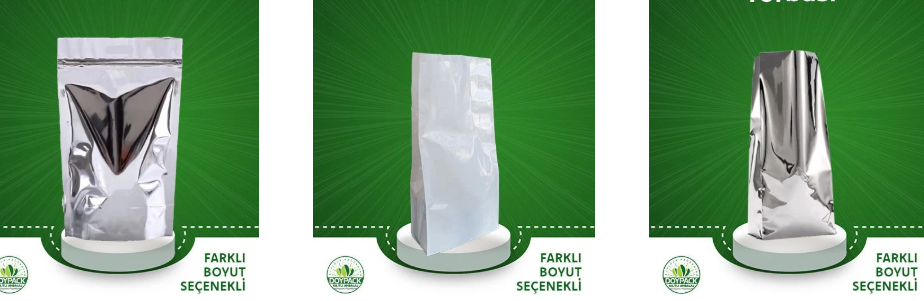
White Polyethylene Raw Material Bag
White polyethylene raw material bags are one of the most preferred bag types. Available in transparent or semi-opaque, these bags are generally made from low-density (LDPE) or high-density (HDPE) polyethylene. Their flexibility and durability make them suitable for many different sectors. They are resistant to water, oil, and moisture. Since food-contact-safe versions are also available, they can be easily used with both industrial and agricultural raw materials.
In which sectors are raw material bags used?
Raw material bags play an active role in a wide variety of sectors. Plastic production, the chemical industry, agriculture, food production, and the construction sector are among the main areas of use. In the plastics sector, they are used for storing raw materials in granular form; in the food sector, for transporting powdered and granular products such as flour, sugar, and coffee ; in construction, they are suitable for materials like cement and lime; and in agriculture, they are common for transporting fertilizers, seeds, and feed. The type of bag varies depending on the sector in which it will be used.
What should be considered when choosing raw material bags?
The first thing to consider when choosing a raw material bag is the composition of the material it will be used with. Different bag specifications are needed for raw materials in powder, liquid, or granular form. Secondly, the bag's resistance to environmental factors should be considered. UV rays, humidity, temperature, and pressure can compromise the structural integrity of the bag. Additionally, the bag's leak-proof properties, ease of transport, filling method (manual/automatic), and recyclability should also be among the selection criteria.
Recyclable Raw Material Bags
With increasing environmental awareness, the demand for recyclable raw material bags has also increased. Polyethylene and polypropylene bags, in particular, can be produced in a way that is suitable for recycling. This reduces production waste and ensures a sustainable production cycle. Producers, especially those in the food and agriculture sectors, strengthen their brand reputation and minimize their environmental impact by choosing these types of bags.


